How Jewelry Stores Can Make the Most of Limited Floor Space
Jewelry stores have a slightly different fixture problem than many other retailers. The products are relatively small, but the presentation needs to give each piece enough room to be seen properly. At the same time, the store still needs space for customers to browse, staff to work, and merchandise to be secured.
That makes planning the sales floor particularly important.
Don’t Try to Display Everything at Once
A jewelry store can have hundreds of individual pieces available, but putting everything on display at the same time can work against you.
When necklaces, rings, bracelets, and other items are packed together, customers have difficulty focusing on individual pieces. A more selective presentation gives each collection some breathing room.
Additional inventory can remain available for staff to show when customers are interested.
Create Clear Product Sections
Customers should be able to understand the store’s layout without asking where everything is.
Separate areas might be used for:
- Rings
- Necklaces
- Bracelets
- Watches
- Earrings
- Bridal collections
Clear sections make browsing easier and allow staff to direct customers toward specific products more efficiently.
Use the Right Case for the Job
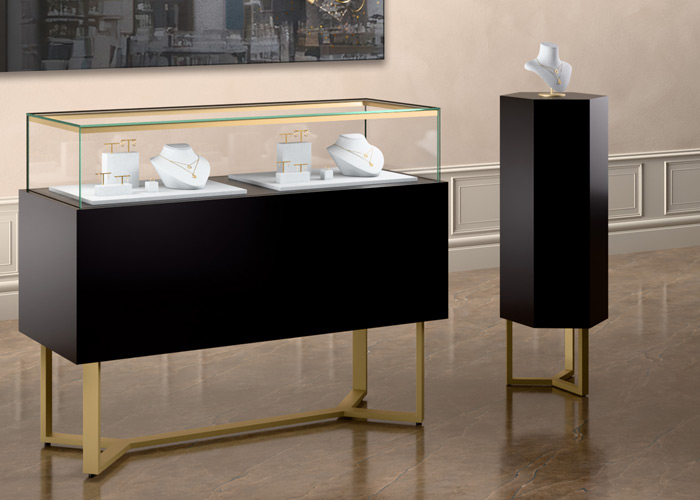
Different jewelry displays serve different purposes.
A countertop case may work well for smaller collections or impulse-oriented pieces, while larger showcases can provide more space for complete collections. Wall-mounted displays can also make use of vertical space without taking up additional floor area.
A jewelry store display case should ultimately support both visibility and security rather than simply filling an empty section of the store.
Keep the Glass Clear
This sounds obvious, but fingerprints and dust become very noticeable on glass.
Customers are examining small products from relatively close distances, so a dirty or heavily marked case can distract from the merchandise. Staff should have a simple routine for wiping down high-contact surfaces throughout the day.
It’s a small maintenance job that has a disproportionate effect on presentation.
Lighting Needs to Be Tested Properly
Jewelry is particularly sensitive to lighting.
The wrong lighting can create reflections across the glass or make certain metals and stones look dull. Test lighting from the customer’s side of the case and look for glare before finalizing the setup.
The objective is to make the product easy to examine, not simply to make the case bright.
Give Premium Pieces More Space
A higher-value collection shouldn’t necessarily be displayed alongside dozens of other pieces.
Creating a dedicated section with more space around the merchandise helps customers focus on the details and gives staff a better opportunity to discuss individual pieces.
The display itself can help establish a hierarchy between everyday and premium products.
Consider the Customer’s Position
Customers don’t view a case from the same position as the person working behind it.
Make sure products remain easy to see while standing on the customer side. Items placed too close together, too low, or behind excessive signage may not get the attention they deserve.
Keep Staff Workflow in Mind
A beautiful jewelry store still needs to function efficiently.
Employees need room to retrieve stock, show products, process transactions, and interact with customers. Cases and counters should be positioned so staff aren’t constantly working around obstacles.
Good merchandising should make selling easier rather than creating another problem.
Refresh Displays Without Constant Redesigns
You don’t need to rebuild the store every time you receive new inventory.
Rotating featured pieces, changing collections, and adjusting product groupings can keep the sales floor looking fresh while using the same fixtures.
This is particularly useful for seasonal collections and promotional periods.
The Practical Approach
Jewelry retail is largely about balancing three things: visibility, security, and customer comfort.
The right combination of cases, lighting, spacing, and product organization can make a relatively small store feel easier to browse while giving valuable merchandise the attention it deserves.